
Politics, Law and Cricket, The Complex Equation Surrounding Shakib
97 Repoter: Mohammed Afzal
Publish: 6 months ago Update: 1 second ago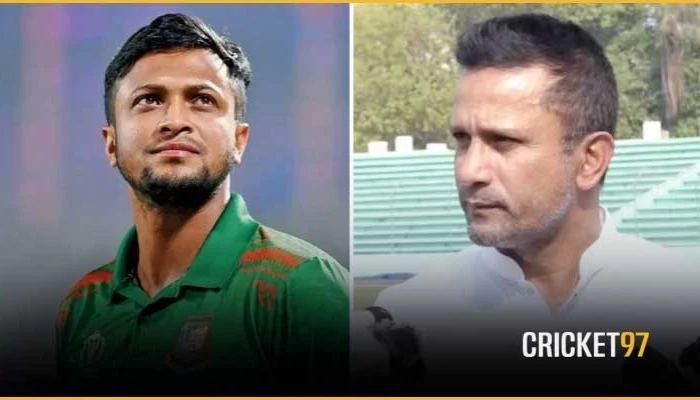
Politics, Law and Cricket, The Complex Equation Surrounding Shakib
Politics, Law and Cricket, The Complex Equation Surrounding Shakib
In Bangladesh’s cricket history, the greatest all-rounder Shakib Al Hasan is now more than just a cricketer; he has become part of a complex political reality. His on-field performances, his position as a Member of Parliament, and a post-uprising murder case have collectively pushed him beyond the boundaries of sport into the sphere of state and political debate.
In the 2024 national parliamentary election, he was elected as an MP from the Magura-1 constituency under the nomination of the Bangladesh Awami League. His popularity on the cricket field transformed into political capital. However, following the July mass uprising and the fall of the government on August 5, that very political identity turned into his greatest risk. His name was included in a murder case filed over allegations of gunfire and casualties during the suppression of the movement. As a result, the issue is no longer merely moral or political — it now carries significant legal implications. As a former MP of the previously ruling party, his position has become directly connected to the new power structure.
In this context, the stance of the Bangladesh Cricket Board (BCB) is difficult to view as purely a sporting decision. His declaration that he would not participate in the India-hosted World Cup citing security concerns, the fear of a possible ICC ban, and sponsorship pressures have placed the board in a strategic dilemma. Leaving out Bangladesh’s most recognizable face in world cricket carries performance risks, but it also involves branding and economic considerations. Therefore, discussions about bringing Shakib back convey messages beyond cricket.
After winning the February 12 election, the Bangladesh Nationalist Party (BNP) formed the new government. The newly appointed State Minister for Youth and Sports, Aminul Haque, has shown a positive attitude toward Shakib’s return to the country, while also emphasizing that the cases must be addressed through due legal process. Although the government’s position appears neutral on the surface, it signals a political balancing act. On one hand, completely sidelining a highly popular sports figure could be politically risky; on the other, ignoring the legal cases is not an option.
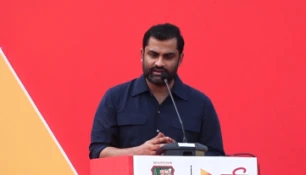
From the beginning of this complex situation, former national team captain Khaled Mashud Pilot has spoken in Shakib’s favor. While he does not hesitate to call Shakib’s political decision a mistake, he does not see it as an unforgivable crime. He said, “Personally, as Khaled Mashud Pilot, I can say I am a big fan of Shakib. Humans make mistakes. He may have become involved with a political party while still playing. But when representing the national team, no player should be involved in politics.”
Speaking about the relationship between the national team and public emotion, he added, “People across the country have emotional attachment to national team players. When you align yourself with a particular political party, that emotion becomes divided. So if you play for the national team, it is better to stay out of politics.”
Regarding the case, the former captain made a significant remark: “In our country, many false cases are also filed. The idea that an international-level cricketer would commit murder from abroad seems questionable to me.” At the same time, he called on the government to clarify the allegations officially.
At present, the Shakib issue stands on three levels. Legally, he is accused but not convicted. Politically, he was an MP of the former ruling party, which remains a sensitive identity. From a sports-economic perspective, he is one of the biggest brands in Bangladesh cricket.
Finally, Pilot’s remarks highlight the human dimension of the debate. He said, “People make mistakes. But he should be seen as a cricketer. I pray that he can finish his career with dignity in the Bangladesh jersey.”
Therefore, the question is not merely about the return of a cricketer. The real question is whether Bangladesh will allow the legal process to proceed while creating a path for the rehabilitation of a controversial yet legendary player in the sporting arena, or whether he will remain permanently marked as part of a political chapter. The decision, therefore, is not just cricketing — it is profoundly political.