
Thushara Takes Legal Action Against Board
97 Repoter: 97author
Publish: 5 months ago Update: 1 second ago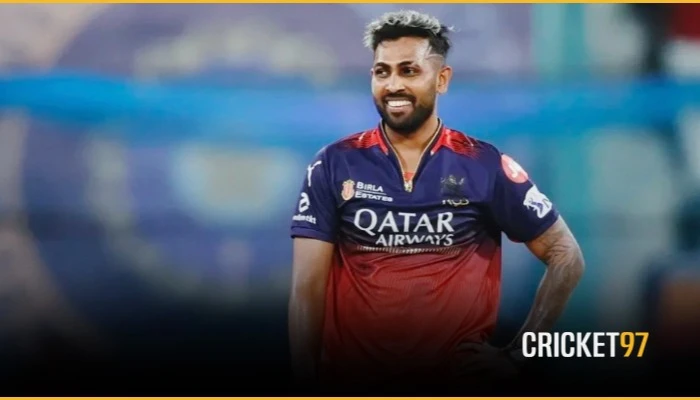
Thushara Takes Legal Action Against Board
Thushara Takes Legal Action Against Board
How far a cricket board’s authority can extend has now become the central question in a growing legal battle in Sri Lanka. The conflict between a player’s professional freedom and the board’s internal policies has brought the country’s cricket administration under fresh scrutiny.
Sri Lankan fast bowler Nuwan Thushara has filed a lawsuit against Sri Lanka Cricket (SLC) in the Colombo District Court after being unable to participate in the IPL. The core of the dispute lies in SLC’s refusal to grant him the required No-Objection Certificate (NOC), citing his failure to meet newly introduced and stricter fitness standards.
In his legal argument, Thushara stated that his central contract expired on March 31, 2026, after which he intended to step away from international cricket. Under such circumstances, he claims that withholding the NOC has created a barrier to his professional earnings. Although he was part of the Royal Challengers Bengaluru squad, the ongoing legal process has made his participation in this year’s IPL highly unlikely.
The case names four top SLC officials as defendants: President Shammi Silva, Secretary Bandula Dissanayake, Treasurer Sujeewa Godaliyadda, and CEO Ashley de Silva. The court has scheduled the next hearing for April 9. However, due to the Easter holidays and the likelihood of multiple hearings, Thushara is expected to miss at least two more weeks of the IPL.
According to International Cricket Council (ICC) regulations, a player must obtain an NOC from their home board to participate in overseas leagues. However, there are no specific guidelines on the criteria for granting or denying such certificates, allowing individual boards to follow their own internal policies. In the past, SLC has denied NOCs by limiting players to a certain number of overseas leagues per year.
The key legal question now is whether a board can enforce the same rules on a player who is no longer under a central contract. According to legal documents, Thushara was formally informed on March 24 that he would not be granted an NOC. He claims to have requested the certificate multiple times—both verbally and in writing—on March 15 and 23. While SLC has not officially responded to his follow-up on March 28, he alleges that he was informally told his request would again be denied.
SLC has justified its decision by pointing to new mandatory fitness requirements introduced after Sri Lanka’s disappointing performance in the recent Men’s T20 World Cup. These measures were implemented by the selection committee led by former fast bowler Pramodya Wickramasinghe.
The updated fitness assessment includes five components: a 2-kilometre run, a 20-metre sprint, a 5-0-5 agility test, a skinfold test, and a counter movement jump (CMJ). Each test contributes to a total score of 29 points, with players required to score at least 17 to be considered eligible. The 2km run and skinfold test carry the most weight, making it particularly difficult to pass if a player performs poorly in those areas.
However, Thushara argues that such fitness standards were never previously mandatory for obtaining an NOC. He maintains that his current fitness levels are consistent with those in 2024 and 2025, when SLC had granted him the required clearance.
The case is also being compared to a recent legal battle involving South African spinner Tabraiz Shamsi. In 2025, Shamsi successfully challenged Cricket South Africa (CSA) in court, which ruled that a board cannot withhold an NOC from a player outside a central contract purely to protect its commercial interests.
That ruling set a significant precedent for player freedom in global cricket. Thushara’s case now takes the debate a step further, raising the question of whether a board can legally enforce its internal policies on a player who is no longer part of the national setup.